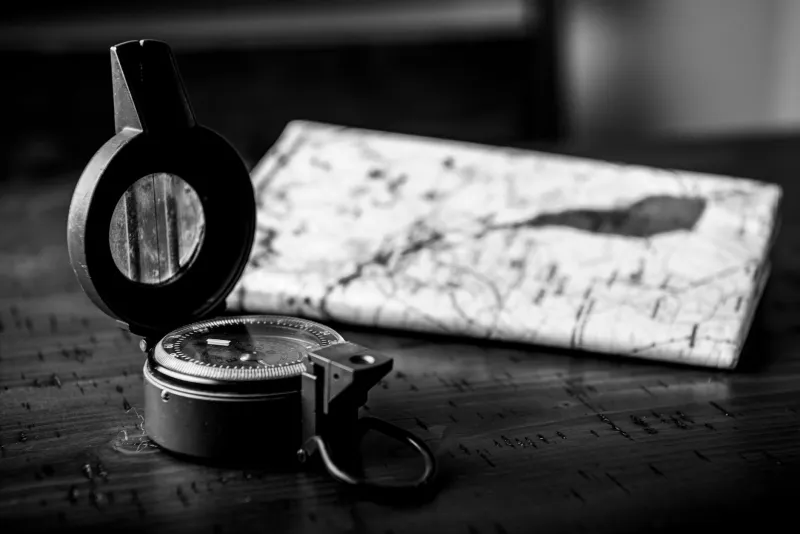
We've Mapped the Skies and the Seas. Why Not a Museum for Magnetism?
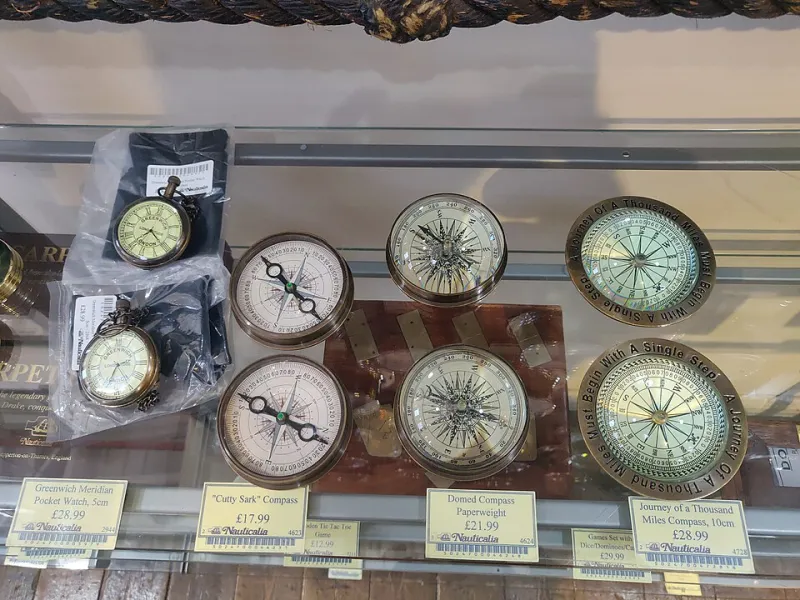
Photo: Tim Sheerman-Chase, CC BY 4.0, via Wikimedia Commons
Britain is very good at museums about things. We have museums for canals, clocks, lawnmowers, pencils and, in London, an entire museum devoted to spies. We have preserved the rooms where writers wrote and the benches where scientists worked. But we do not have a national museum of magnetism. For a country with such a strange and useful magnetic history, that feels like an oversight.
This is not a demand for another vast glass atrium full of interactive screens. It is a simpler argument: magnetism is one of the most important invisible forces in British life, and it deserves a public place where people can see how it shaped navigation, industry, medicine and the weather above our heads.
A force with a British paper trail
Start with the paper trail. In 1600, the English physician William Gilbert published De Magnete, a book that treated magnetism as a serious experimental subject rather than a philosophical curiosity. In 1581, Robert Norman, a compass maker, described magnetic dip — the way a compass needle wants to tilt downwards as well as point north. In 1701, Edmond Halley produced a chart showing magnetic variation across the Atlantic, a practical tool for sailors who needed to know that magnetic north was not the same as true north.
Then came Michael Faraday at the Royal Institution in London. In 1831, he demonstrated electromagnetic induction, the principle behind generators, transformers and much of the modern electrical world. Later in the nineteenth century, British scientists and observatories helped turn magnetism into a global monitoring science. Kew, Hartland, Eskdalemuir and Lerwick all have roles in that story. So does the shipping industry, which relied on carefully adjusted compasses long before GPS made the question seem trivial.
That is a remarkable heritage. It is also scattered across institutions, archives and display cases. A few compasses here, a portrait there, a magnetometer in a store room. What is missing is the connective tissue.
What would go in it?
A good museum of magnetism would not be a cabinet of iron filings. It would be a museum about how an invisible force becomes visible through instruments, materials and consequences.
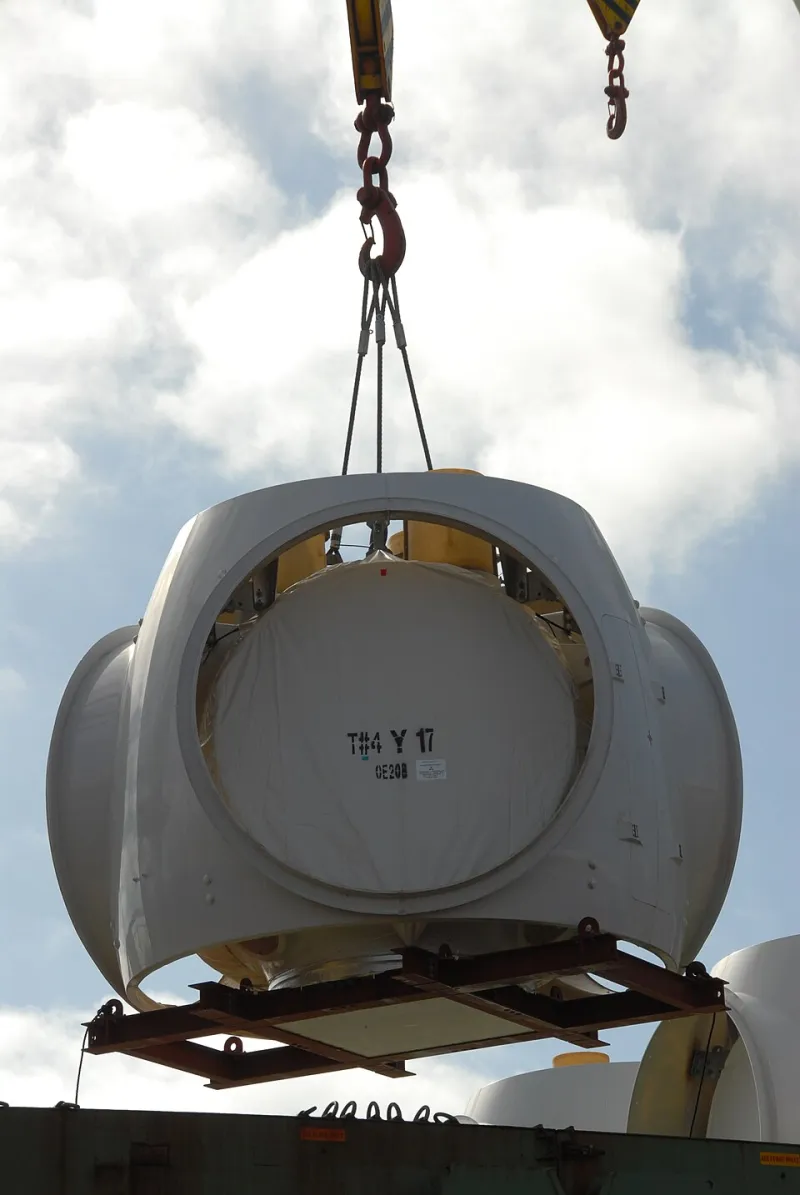
One gallery could follow the compass from lodestone to Halley's charts to the modern smartphone magnetometer. Another could recreate Faraday's laboratory bench and explain, in plain language, how a changing magnetic field can push electrons through a wire. A third could look at magnetism at work: MRI scanners, electric motors, wind turbines and the recycling labs trying to recover rare-earth magnets.
And then there is the sky. Space weather is no longer a niche concern. Solar storms can disturb satellites, radio communications and power grids, and the aurora displays that have delighted UK skywatchers in recent years are a visible reminder that Earth's magnetic field is doing real work. A live feed from a British magnetometer would make that connection immediate. You could walk in during a quiet day and see the field breathing.
There is also room for myth-busting. Do fridge magnets get tired? Can magnets cure everything? Why does a compass point north, and why does it sometimes point somewhere slightly else? These are exactly the questions that make magnetism a good public subject: everyone has a magnet on their fridge, but almost nobody has been shown the bigger picture.
Where should it sit?
A national museum needs a home, and there are several candidates. Greenwich is tempting because the story of magnetic variation is a story of navigation, and the Royal Observatory already draws visitors who come for the meridian. The Royal Institution would be poetically apt, given Faraday's presence there. Manchester or Birmingham would make sense for the industrial and materials side of the story, especially the recycling of magnets. Edinburgh and Devon already host magnetic observatories with deep historical roots.
My practical suggestion is a distributed museum with a physical heart. Put the main galleries somewhere with good footfall and a strong maritime or scientific connection — Greenwich or central London — then link them to working sites at Hartland, Eskdalemuir and a university materials lab. The museum would not just display the past. It would show magnetism as a live science with instruments, data and unresolved questions.
Why magnetism keeps missing the party
So why has this not happened? Partly because magnetism is invisible, and invisible things are hard to exhibit. Gravity has falling apples and orbiting planets. Magnetism has iron filings and a vague memory of school experiments. It lacks a charismatic megafauna. It is also horizontal: it cuts across physics, geology, medicine, engineering, navigation and space weather. Museums tend to be organised by discipline or by collection, and magnetism falls between the cracks.
There is a funding story too. A national museum needs a collection, a building, staff and a reason for people to visit more than once. Magnetism has no single obvious donor class. It is not a lost railway or a famous warship. It is a force.
But that is exactly why it could work. In 2026, the UK is talking about critical minerals, energy security, space weather and the materials inside clean technology. A museum of magnetism would be a public interface for all of that. It could be a workshop as much as a gallery, with schools trying magnetometers, conservators caring for historic compasses, and researchers explaining why a turbine magnet in a recycling lab matters to the climate transition.
We preserve what we value, and we value what we can see. Magnetism has shaped Britain's maps, ships, labs and lights. It is strange that we still ask the public to take it on trust. A national museum would not make the force visible. But it would make the story impossible to miss.