The Towpath Treasure Hunt: Neodymium Magnets and the Truth About Canal Magnet Fishing
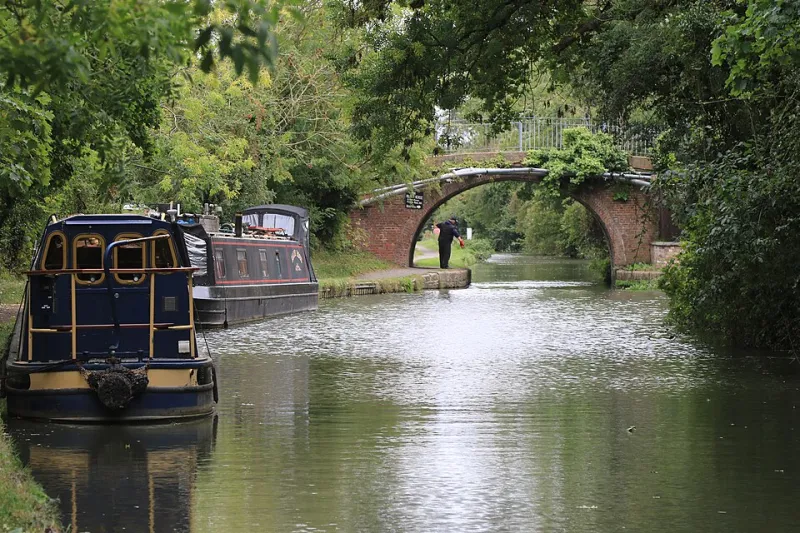
Photo: Andrew Abbott , CC BY-SA 2.0, via Wikimedia Commons
On a damp Saturday beside the Kennet and Avon, the scene has become oddly familiar: a length of rope, a pair of muddy gloves, and a small block of metal that looks far too ordinary for the fuss. Then someone hauls in a bicycle frame, a shopping trolley wheel, or a safe with no combination and no explanation. Magnet fishing has turned Britain's towpaths into a weekend treasure hunt, and the lure is easy to understand. It is part physics, part mudlarking, part the simple thrill of not knowing what is down there.
But the hobby deserves a closer look than a viral clip allows. The magnets involved are genuinely remarkable materials. The places they are used are ecologically sensitive, legally complicated, and sometimes physically hazardous. And the gap between what a magnet can lift in a workshop and what it can lift out of a silty canal is a useful lesson in how magnetism actually behaves.
A Fist-Sized Magnet With a Serious Grip
Most magnet fishing kits use neodymium-iron-boron magnets, usually sintered NdFeB with a protective nickel coating. They are the same family of magnets found in hard drives, headphones and electric motors, but the fishing versions are built for brute force: a single pot magnet or block might be rated at 200kg, 300kg, even more.
That rating is not a magic number. It is a pull force measured under favourable conditions: direct contact with a thick, flat, clean piece of mild steel, pulling straight away from the surface. In a canal, the target is rarely flat, rarely clean and rarely mild steel. Rust, algae, silt, curved tubing and awkward angles all reduce the grip. So does leverage. If a submerged object is jammed under a rock, the magnet may hold it firmly while the rope simply cannot move it.
There is another subtlety. Magnets are much stronger in shear than in peel. Sliding a magnet sideways across steel can feel almost impossible, while prising one edge up can release it with a sudden snap. That is why experienced magnet fishers retrieve slowly and steadily rather than yanking. The magnet is not a crane. It is a very strong temporary fastener with a tendency to bite.
Why 200kg Is Not the Whole Story
Magnetic field strength falls off quickly with distance. A neodymium magnet that clings to a steel plate can feel almost dead an inch away. In water, that means the magnet usually has to make contact, or come very close, before it grabs anything. A layer of mud can be enough to weaken the connection. A rusty bike frame presents edges and curves rather than a flat plate. And a long rope adds stretch, angle and the chance of losing the object on the way up.
The keeper matters too. Many pot magnets come with a steel keeper across the face, which helps preserve the magnetic circuit during storage. Lose the keeper, bang the magnet about, or let it snap onto a car door, and you may end up with a chipped coating or a magnet that is harder to handle safely. Neodymium magnets are brittle. They do not like impact, and they do not like heat. A sunny car dashboard is not a good home for one.
The Riverbed Is Not a Filing Cabinet
Here is where the hobby gets more serious. An intact neodymium magnet is not a chemical pollutant in any meaningful sense. It is a solid lump of metal alloy, and the water around it is not going to turn magnetic or toxic because someone lowered a block into a canal. The environmental concerns are mostly physical and behavioural.
Dragging a magnet through a riverbed stirs up sediment. That sediment can contain old industrial contamination, nutrients, microplastics and organic matter that is better left buried. It can also disturb spawning fish, aquatic plants and the small invertebrates that hold a waterway together. A single magnet fisher doing a careful retrieval is not a dredging operation, but a crowd of people scraping the same stretch every weekend is a different matter.
There is also the litter question. Pulling out a trolley is one thing. Pulling out a trolley and leaving a pile of rusting metal, tangled line and broken glass on the bank is another. Most responsible groups operate a leave-no-trace approach: take away what you retrieve, bag sharp items safely, and report anything hazardous rather than posing with it.
Damage to the magnet itself is worth a mention. If the nickel coating flakes and the NdFeB alloy is exposed, it can corrode in water. The amounts involved are tiny, but a damaged magnet should be retired rather than trailed through a waterway. Treat it as a piece of kit, not a disposable hook.
Rules, Permissions and the Finds You Must Report
Magnet fishing is not automatically legal everywhere in the UK. It is not the same as angling, but that does not mean a rod licence covers it or that every towpath is fair game. In England and Wales, canals are often managed by the Canal & River Trust, while rivers may fall under the Environment Agency, local authorities, internal drainage boards or private landowners. Some sites allow magnet fishing with conditions. Others prohibit it. Some bylaws are aimed at fishing, some at dredging, some at removing material from the bed. The safe starting point is simple: ask before you go.
The Canal & River Trust has published guidance for magnet fishers, and the Environment Agency is the body to check for many river questions. In Scotland, access rights are different, but they are not a free pass to disturb a riverbed or ignore local rules. If you are unsure, contact the relevant authority and keep the reply.
Finds are their own legal minefield. Archaeological objects may fall under the Portable Antiquities Scheme in England and Wales, and the Treasure Act has specific rules. Protected wrecks and military remains have their own restrictions. If you pull up something that looks historic, do not scrub it clean, do not take it home as a trophy, and do not assume it is yours. Photograph it, note the location, and report it.
And if you bring up something that looks like ordnance, stop. Do not move it, do not put it in your bag, and do not pose with it. Call the police and follow their instructions. This happens more often than people expect.
A Beginner's Kit and the Mistakes to Skip
Start smaller than the internet suggests. A 200-300kg rated magnet is plenty for a first season and easier to control. Pair it with a strong, non-stretchy rope rather than paracord, which can snap and recoil. Wear cut-resistant gloves and eye protection. Keep fingers out of the gap between magnet and steel. Never tie the rope around your wrist or waist. Keep the magnet away from pacemakers, insulin pumps and other medical implants, and keep children well back during retrieval.
A stable stance matters more than strength. Do not lean over a steep bank. Do not pull against a jammed object with your body in line with the rope. Use a friend, a landing net or a bank stick to guide the find once it is near the surface. Carry a first aid kit, check your tetanus status, and wash your hands before eating. Canal water is not a spa.
Store the magnet with its keeper fitted, away from electronics, bank cards and anything you would rather not erase. And accept that most sessions will produce bottle caps, nails and the occasional deeply unglamorous spanner. The treasure is in the curiosity, not the resale value.
So, Is It Worth Getting Hooked?
Yes, with caveats. Magnet fishing is a genuinely accessible way to touch the physics of magnetism: the snap of a field, the difference between pull and shear, the way distance kills a grip. It also puts you face to face with the hidden material culture of Britain's waterways, from Victorian ironwork to the astonishing number of bicycles that apparently live in canals.
But it is not a victimless hobby. The waterbed is a habitat, the bank is often private, and the rules are not uniform. The best magnet fishers are the ones who ask first, retrieve carefully, take their rubbish home and know when to leave something alone. That is a very British kind of treasure hunt: modest, muddy, and much more interesting once you understand the forces at work.